


As a parent, seeing your baby’s or child’s irritated facial skin is never reassuring. Redness, dryness, itching or tightness can appear on these fragile skins, causing discomfort for the child and concern for parents. Rest assured: with the right habits and suitable care, it is entirely possible to soothe these irritations and help the skin repair itself sustainably.
In this article, we explain the specific characteristics of irritated facial skin, break down its causes (climate, products, stress, etc.) and symptoms, and then guide you on how to care for it gently on a daily basis. You will discover natural solutions – such as floral waters, prebiotics and plant oils – to strengthen the skin barrier, as well as our advice on suitable soothing creams. The goal: to give you all the keys to effectively calm facial irritation and prevent recurrence, so your child’s skin remains comfortable and healthy.
What to keep in mind
- An irritated face is characterised by redness, dry patches, itching, burning or tight sensations.
- Because babies’ and children’s skin is thinner and more fragile, it is more prone to irritation from external aggressions.
- Several factors can cause irritation: cold, wind, pollution, unsuitable skincare products or stress.
- It is important to distinguish temporary irritation from atopic eczema, which requires medical care.
- To soothe immediately, let the skin rest, cleanse with lukewarm water and a gentle product, then apply a soothing cream. Never scratch.
- Floral waters, prebiotics and plant oils are excellent natural remedies to calm and repair the skin.
- For prevention, daily hydration and protection during seasonal changes are your best allies.
Which cream is best suited for your child?
What characterises irritated facial skin?
Skin is described as irritated when it shows signs of inflammation and discomfort. On the face, this typically results in redness, dryness with possible flaking, and sensations of stinging, burning or tightness. The skin is, in a way, “overreacting” because its protective barrier has been weakened.
This skin barrier, made up of the hydrolipidic film (a mix of sebum and sweat) and the stratum corneum, normally protects the skin from external aggressions while limiting water loss. When it is compromised, the skin becomes more permeable to irritants, dehydrates more easily and triggers inflammatory reactions. This is not a skin type in itself, but rather a temporary condition that can affect all ages and skin types (although dry and sensitive skin is more prone).
What is the difference between sensitive skin, allergic skin and irritated skin?
The terms sensitive skin, reactive skin, intolerant skin and irritated skin are often used interchangeably, as they share similar symptoms. However, their origins differ.
Sensitive skin refers to skin with a lowered tolerance threshold: it reacts excessively to normally well-tolerated factors (cold, heat, friction, stress), causing stinging, burning or tightness, sometimes with mild, temporary redness. Sensitive skin does not involve the immune system and often reflects a weakened skin barrier.
Irritated skin, on the other hand, is usually the result of a clearly identifiable external aggression (for example: prolonged contact with an irritating substance, harsh cold, wind, hard water, an overly aggressive cosmetic product, etc.). Irritation often appears locally on the affected area. Symptoms are similar to sensitive skin but are more visible: clearly defined redness, sometimes slight swelling and flaking. Fortunately, this type of irritation generally fades quickly once the cause is removed.
Allergic skin involves the immune system. This is the case with allergic contact eczema, for example: the skin reacts to a specific allergen by triggering a disproportionate inflammatory response. The affected area shows diffuse redness, sometimes small blisters or oozing, and above all intense itching that can disrupt a child’s sleep. Unlike simple irritation, it persists even after the allergen is removed and often requires medical treatment.
Why is babies’ and children’s skin more vulnerable to irritation?
Young children’s skin has unique characteristics that explain its fragility. In infants, the epidermis is around 20% thinner than in adults, and the stratum corneum up to 30% thinner, making it more permeable to external aggressions. This immature barrier allows greater water loss and easier penetration of irritants and allergens.
Additionally, newborn skin has a near-neutral pH (around 7), whereas adult skin is slightly acidic (around 5.5). This higher pH weakens natural skin defences. Combined with an immature hydrolipidic film, this explains the frequent dryness seen in babies and why their skin requires daily protection and hydration.
On a pensé à tout pour apaiser votre peau sensible
What causes red, irritated facial skin?
Many external and internal factors can explain the appearance of red, irritated facial skin. Identifying these causes helps protect the skin more effectively.
How do environmental factors like cold or pollution affect the skin?
Cold and wind dry out the epidermis by damaging the hydrolipidic film, leading to redness and discomfort. Pollution also plays a major role: fine particles and gases create oxidative stress, weaken the skin barrier and make the skin more reactive.
Can unsuitable skincare products cause redness?
Yes. Using unsuitable cosmetics is a common cause of facial irritation. Cleansers with harsh sulfates, alcohol-based products or heavily fragranced creams can damage the skin barrier. Gentle, minimalist formulas are always preferable for sensitive skin.
Do stress and diet play a role?
Absolutely. Stress can increase cortisol production, disrupt skin circulation and immunity, and worsen redness. Diet also plays a role: alcohol, spicy or fatty foods can exacerbate inflammation, while a balanced lifestyle supports calmer skin.
How to recognise symptoms of facial irritation?
It can be difficult to tell the difference between simple irritation and a more serious skin condition.
Why does my face itch and feel tight?
Itching and tightness are common signs of a weakened skin barrier. These sensations are often temporary and improve with appropriate soothing and hydrating care.
How to distinguish temporary irritation from atopic eczema?
Temporary irritation is usually localised and resolves quickly with care. Atopic eczema, however, is chronic, intensely itchy, recurrent and associated with overall skin dryness, often requiring medical management.
How to care for facial irritation daily?
Once irritation appears, adopting the right reflexes helps soothe the skin and support repair.
How to soothe irritated facial skin immediately?
At the first signs, let the skin rest. Stop unnecessary products, cleanse gently, apply a cool compress if needed, then use a soothing, repairing cream. Never scratch.
What gentle habits help reduce redness?
Use lukewarm water, avoid rubbing, skip scrubs and peels, and protect the face from cold, wind and sun during recovery.
What cleansing routine avoids irritation?
Keep it simple: rinse with water or use a gentle cleanser such as fragrance-free micellar water, enriched with soothing ingredients like cornflower floral water.
How to naturally soothe irritated skin?
Nature offers valuable resources to calm and regenerate fragile skin.
Benefits of floral waters
Floral waters are gentle and well tolerated. Roman chamomile and cornflower water are particularly soothing for redness and irritation.
Why are prebiotics essential?
Prebiotics nourish beneficial skin bacteria, helping restore the microbiome and strengthen the skin barrier naturally.
Which plant oils are best for dry, irritated skin?
- Sweet almond oil – softening and soothing.
- Sunflower oil – rich in omega-6, supports barrier repair.
- Jojoba oil – strengthens the hydrolipidic film and balances the skin.
Which cream should you apply on irritated skin?
When to use APAISÉA for fragile skin?
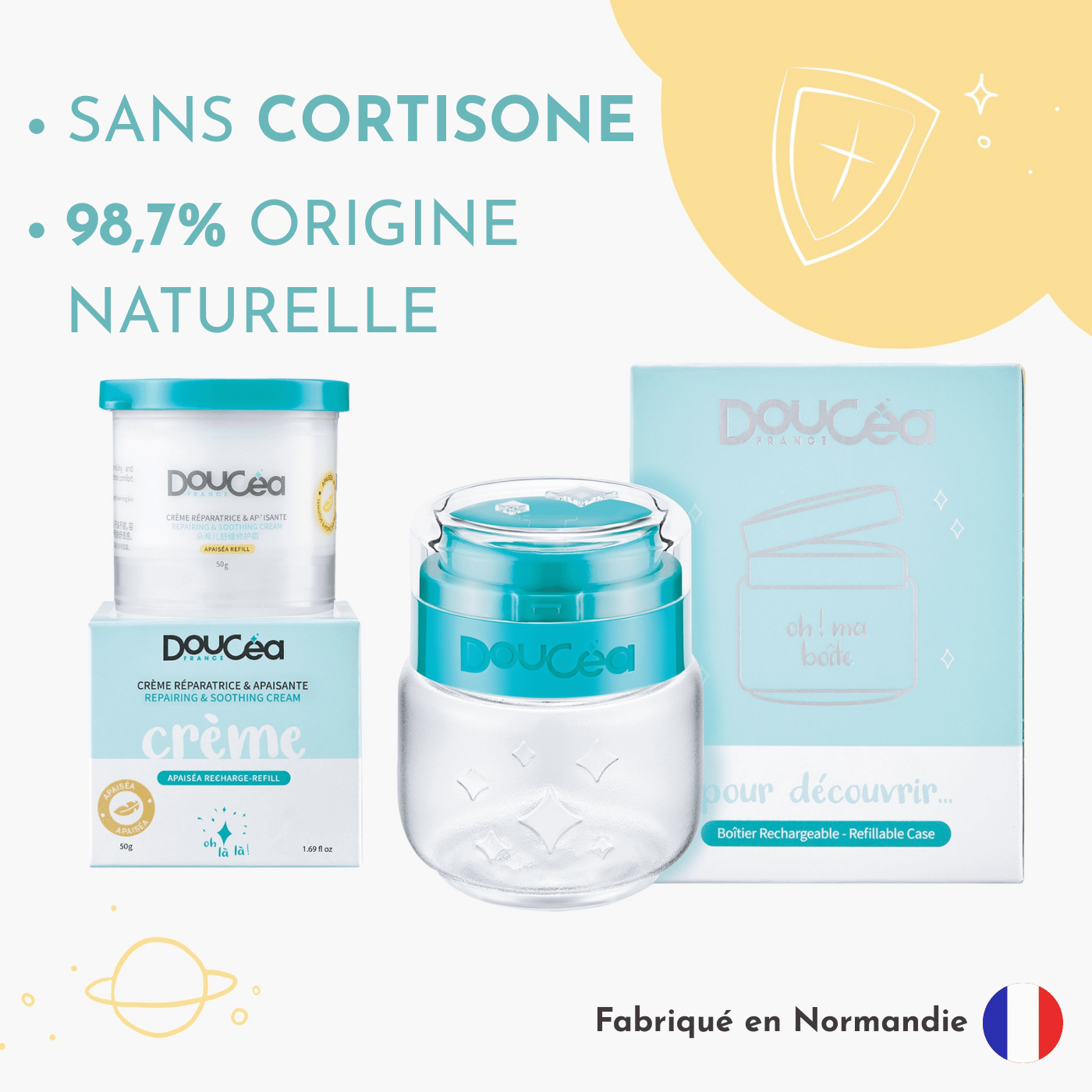
APAISÉA is ideal for daily sensitivity, helping soothe redness, hydrate and strengthen the skin barrier.
When to choose DOUTOPIA for very dry or atopic skin?
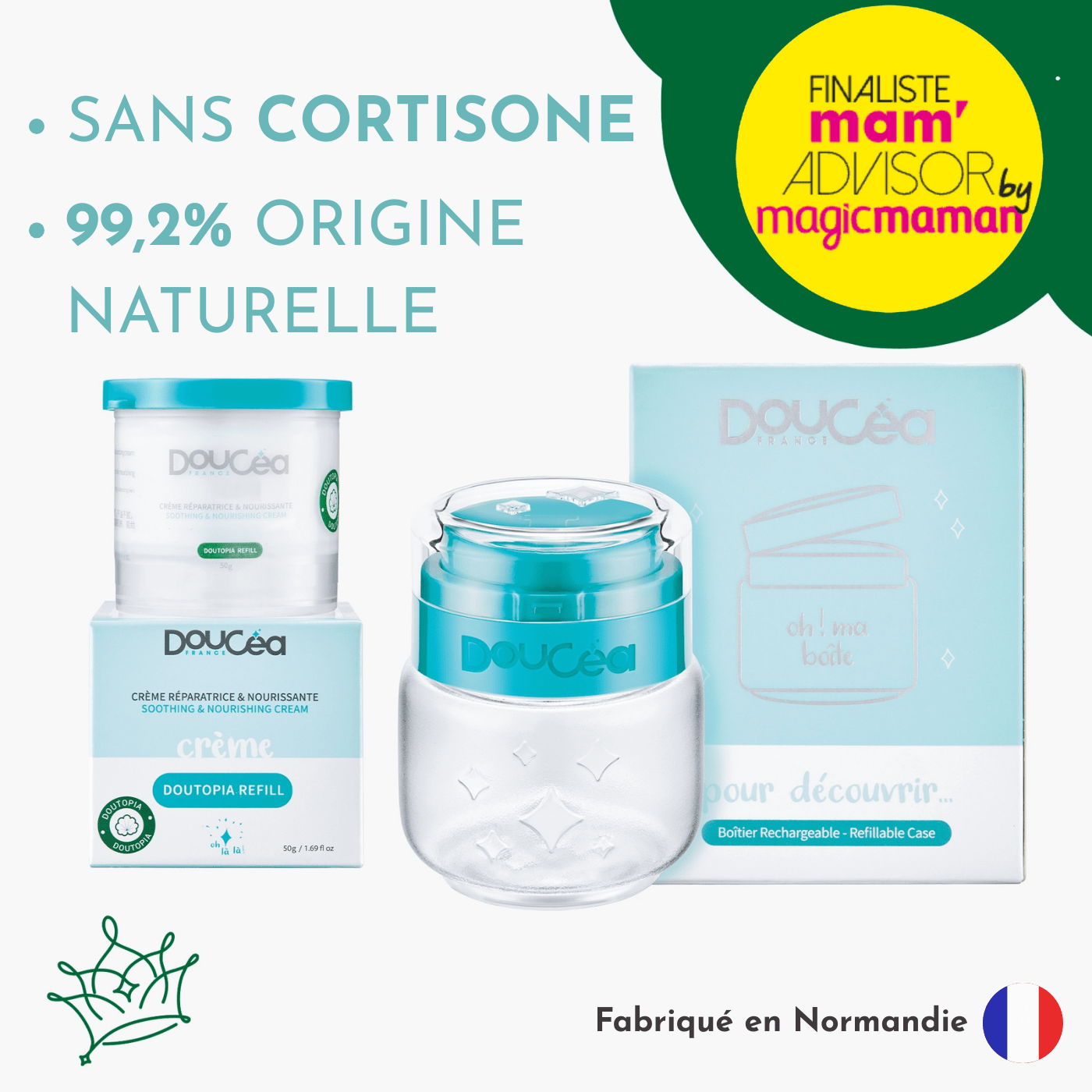
DOUTOPIA is designed for very dry or atopic-prone skin, providing intense nourishment and comfort.
How to prevent facial irritation from returning?
Prevention relies on daily hydration and adapting care to seasonal changes.