

While swimming is a beneficial activity for physical health and well-being, it nevertheless exposes the epidermis to significant chemical and physical aggressions. Many swimmers, young and old, notice the appearance of redness, itching, or intense dryness after bathing. Understanding the biological mechanisms of these reactions is essential to better protect against them. This article deciphers the causes of skin eruptions related to pool water and offers concrete solutions to preserve the skin health of the whole family.
Key takeaways
- A skin reaction after the pool generally manifests as intense dryness ("crocodile skin" effect), diffuse redness, and itching that indicate alteration of the protective film.
- The main culprits are chlorine and chloramines which strip the natural oils from the epidermis and modify its pH, making the skin permeable and vulnerable to irritation.
- Babies, children, and atopic-prone skin are particularly affected because their skin barrier is thinner or already weakened, allowing irritating agents to penetrate more easily.
- It's crucial to distinguish classic chemical irritation from bacterial infection (like folliculitis) which causes small purulent bumps and requires medical consultation.
- The essential action is to take an immediate soapy shower with a gentle cleanser as soon as you exit the pool, as a simple water rinse isn't enough to remove chemical residues.
- To repair skin, applying care rich in prebiotics and vegetable oils is necessary to restore skin flora destroyed by chlorine and deeply relipidize the epidermis.
- As prevention, applying cream or oil 20 minutes before bathing creates an effective barrier film that considerably limits penetration of chemical agents.
Why do I have a rash after the pool?
Pool water is a complex artificial environment. To guarantee swimmers' sanitary safety, it undergoes rigorous chemical treatments which, while eliminating bacteria, can also alter the skin barrier. The skin then becomes weakened by a combination of chemical and physical factors.
Can pool water cause a rash?
Prolonged contact with water isn't insignificant for the skin. Through an osmosis phenomenon, pool water tends to hyper-hydrate the stratum corneum (the most superficial layer), which causes cell swelling and temporary disorganization of intercellular lipids. Paradoxically, once out of the water, rapid evaporation causes deep dehydration by "drawing out" the water naturally contained in the epidermis. Additionally, water temperature plays a key role: warm water (heated pool, jacuzzi) more easily dissolves the hydrolipidic film, that natural sebum shield that protects our skin, thus leaving it vulnerable to aggressions.
Chlorine and chloramines: what impacts on the epidermis?
Chlorine is the most widespread disinfectant agent, but it's a powerful oxidant. It attacks skin proteins and dries out cell membranes. However, the real culprits of severe irritation are often chloramines. These volatile chemical compounds form when chlorine reacts with organic matter brought by swimmers (sweat, saliva, cosmetics). Chloramines are particularly irritating to mucous membranes and skin, capable of causing burning sensations and deteriorating the skin barrier, thus promoting penetration of other allergens.
What is pool dermatitis (or folliculitis)?
Simple chemical irritation should not be confused with pool dermatitis, also called "hot tub folliculitis." This infection is caused by a bacterium, Pseudomonas aeruginosa, which proliferates in warm and poorly chlorinated waters. It manifests 48 to 72 hours after bathing with the appearance of small red bumps or pustules centered on hair follicles (hair roots). Unlike diffuse chlorine irritation, this eruption often localizes on areas covered by swimsuit, where wet fabric maintains bacteria in contact with skin.
Why do atopic-prone skins react more violently?
People suffering from eczema or atopic dermatitis have a naturally deficient skin barrier. Their more porous skin allows irritating agents like chlorine to penetrate much deeper. Additionally, pool water pH (generally basic, around 7.4) is higher than physiological skin pH (acidic, around 5.5). This imbalance disrupts the skin microbiome and further dries out already lipid-deficient skin, almost systematically triggering inflammatory flare-ups or severe dryness patches.
Which cream is best suited for your child?
On a pensé à tout pour apaiser votre peau sensible
How to recognize symptoms of a skin reaction?
Precisely identifying the type of reaction is the first step in adopting proper care. Symptoms vary greatly depending on whether it's chemical irritation, infection, or physical reaction to water.
What are the symptoms of chlorine exposure in a pool?
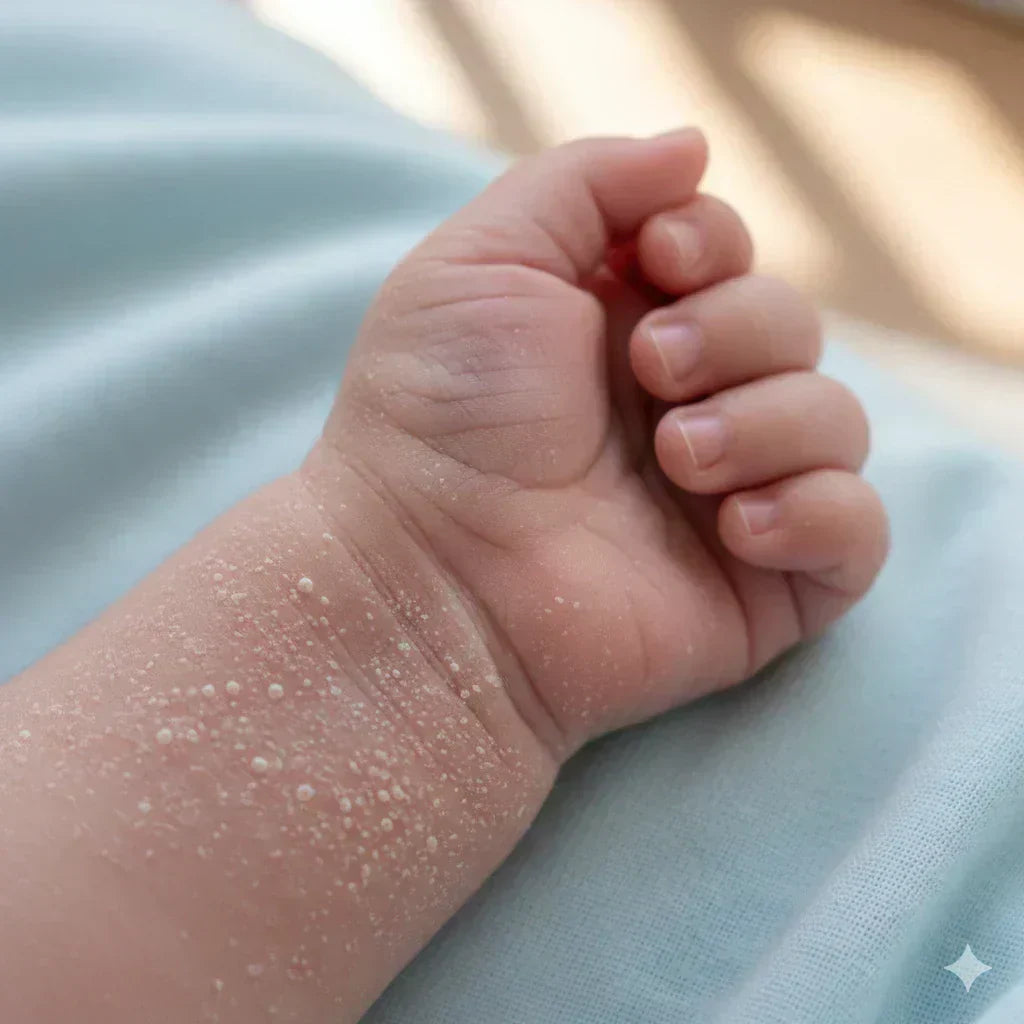
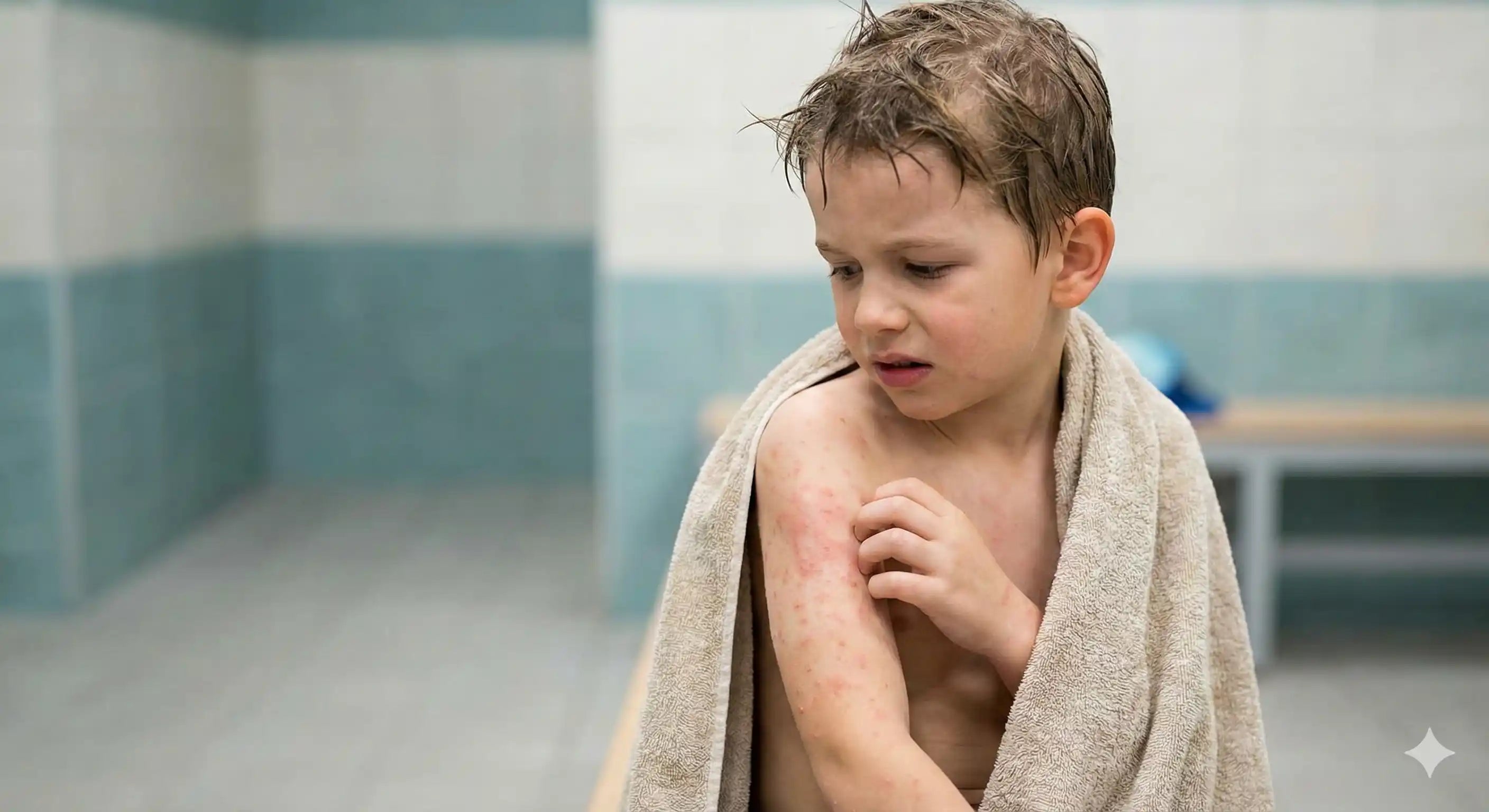
The most common reaction is irritant contact dermatitis. It manifests as dry, tight skin ("crocodile skin" effect), and diffuse redness. Itching often occurs quickly after leaving the water. Visually, skin may present fine white scaling. These symptoms mainly affect areas where skin is thin (face, inner arms) or subject to equipment friction (goggles, swimsuit).
How to distinguish classic irritation from chlorine allergy?
It's important to clarify that chlorine allergy doesn't exist in the immunological sense (it's not an IgE-mediated allergy like peanut allergy). What's improperly called "allergy" is actually hypersensitivity or major chemical irritation. The difference lies in intensity and predisposition: irritation affects everyone if chlorine dose is strong, while hypersensitivity triggers symptoms (intense redness, sometimes respiratory symptoms like asthma) even at low dose in predisposed subjects. If skin burns immediately upon water contact, it's a sign of skin hyper-reactivity.
What are the symptoms of aquagenic skin allergy?
Aquagenic urticaria is a very rare condition where it's the water itself that triggers the reaction, regardless of its quality. Symptoms appear in less than 30 minutes: a multitude of small 1 to 3 mm papules surrounded by a red zone, accompanied by intense itching. These lesions occur on the trunk and arms and generally disappear spontaneously 30 to 60 minutes after drying.
When should you consult a dermatologist?
If redness is accompanied by facial swelling, breathing difficulties, or if lesions become purulent and painful (sign of bacterial superinfection), medical consultation is imperative. Similarly, if a rash persists more than a few days despite rigorous application of moisturizing care, it's necessary to consult to rule out fungal or bacterial infection requiring specific drug treatment.
Discover our repairing care for atopic-prone skin
How to relieve and treat chlorine irritation?
Once irritation is established, quick action is needed to restore comfort and skin integrity. The goal is to eliminate irritating residues and rebuild the protective film.
What are the first actions to adopt after bathing?
The absolute priority is skin decontamination. Never let chlorinated water dry on the body. An immediate shower with lukewarm water (not hot, to avoid reactivating inflammation) is essential. Drying must be meticulous but gentle: pat the skin with a towel without ever rubbing vigorously, which would only worsen epidermis micro-lesions.
How to naturally soothe redness and itching?
To calm the "fire" of irritation, cold is a precious ally (cool or thermal water compresses). Using hydrosols, like cornflower floral water, offers immediate soothing and decongestant action. Vegetable oils rich in fatty acids (omega 6 and 9) are also very effective for relipidizing skin. Sweet almond or jojoba oil, for example, has a structure close to human sebum, allowing optimal penetration without greasy effect.
What is hydration's role in skin barrier repair?
Hydration isn't optional, it's the key repair action. Applying emollient care helps "re-cement" skin cells together. Moisturizing actives (glycerin, complex sugars) retain water in tissues, while fatty substances form a protective occlusive film that prevents water from evaporating again. A restored skin barrier is impermeable to allergens and less reactive to future bathing.
Are medical treatments always necessary?
No, in most cases of xerosis (dryness) or simple irritation, an appropriate dermo-cosmetic routine is sufficient. Cortisone-based treatments (dermocorticosteroids) are reserved for inflammatory pathologies like acute eczema flare-ups and must be used with medical advice. For common swimmer discomforts, the preventive and reparative approach with appropriate care is often the best strategy.

What Doucéa routine to adopt to protect and repair skin?
Although dedicated to children, Doucéa's expertise in sensitive skin is relevant for the whole family. Our formulas favor naturalness and respect for skin microbiome, two elements undermined by chlorine.
Why favor natural formulas (prebiotics, oils)?
Chlorine indiscriminately destroys both bad and good skin bacteria. To restore this balance, Doucéa integrates natural prebiotics (like Inulin) into its care products. These 100% natural sugars (from sugar cane and beets) specifically nourish good bacteria, thus strengthening skin's natural defenses against aggressions. Organic vegetable oils advantageously replace petrochemical mineral oils by providing essential bio-assimilable nutrients to the epidermis.
How does Apaiséa cream restore skin comfort?
Apaiséa cream is formulated to instantly calm. Its complex of natural oils (Sweet Almond, Sunflower, Jojoba) reconstitutes the hydrolipidic film dissolved by pool water. The cornflower floral water it contains acts as a natural anti-inflammatory, visibly reducing redness. It's the ideal daily care to maintain supple and resistant skin between two swimming sessions.
When to use Doutopia cream for intense nutrition?
For very dry, atopic-prone skin or skin presenting rough patches after pool, Doutopia cream offers a more intense response. It contains Madecassoside, a purified extract of Tiger Herb (Centella Asiatica), recognized for its powerful healing and repairing properties. This care acts as a plant-based dressing, promoting cellular regeneration and soothing deep itching due to severe dryness.
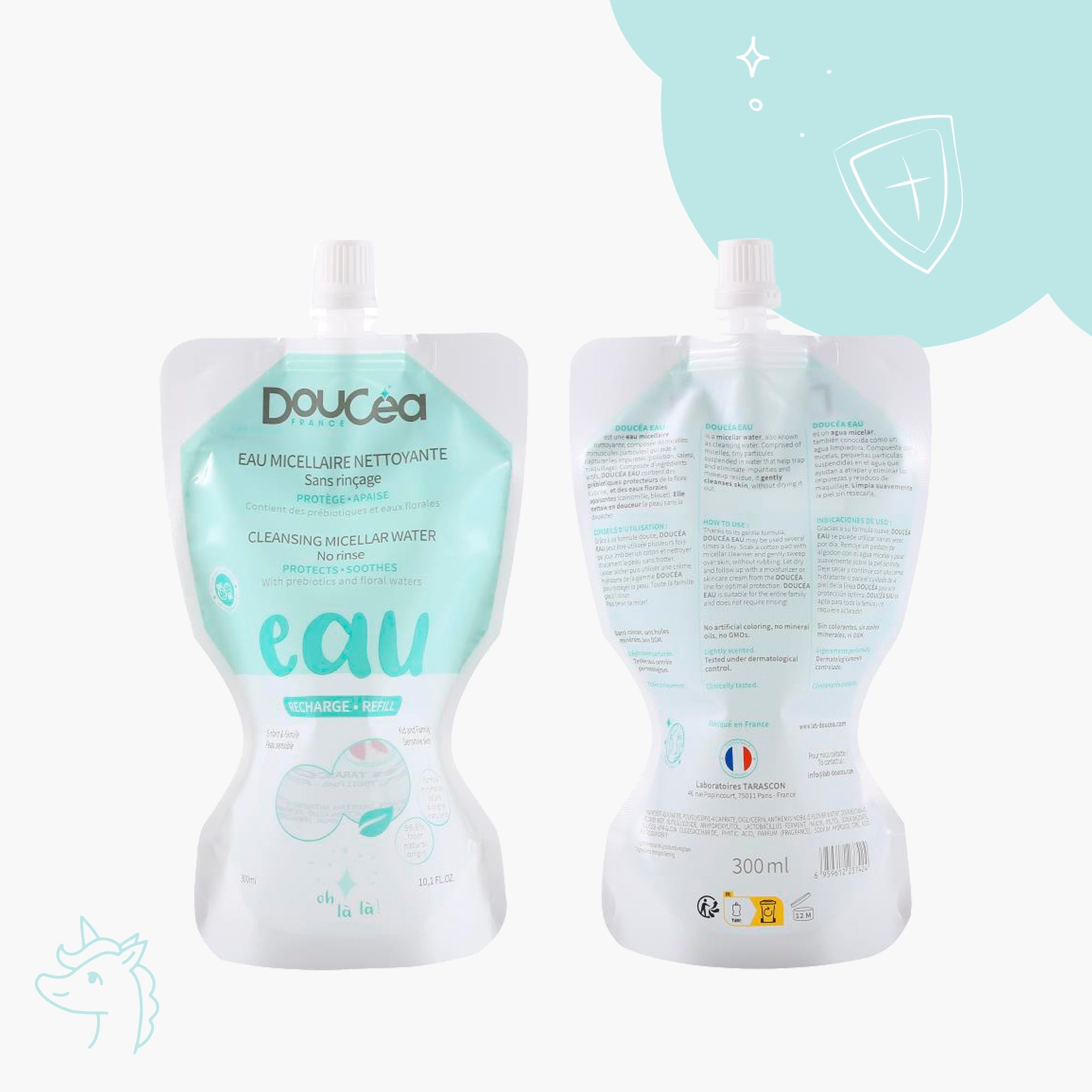
Doucéa Micellar Water: gentle cleansing to remove residues
Cleansing the face after the pool is crucial, but tap water (often hard) can further irritate. Doucéa Micellar Water captures impurities and chlorine residues thanks to its gentle micelles, without stripping the skin. Enriched with probiotics, it participates in positive recolonization of skin flora from the cleansing step, leaving skin clean and soothed.
Why does the playful approach to care help maintain a regular routine?
Regularity is the secret of healthy skin. For younger ones, cream application can be experienced as a constraint. Doucéa's playful cases transform this moment into a game, promoting treatment compliance. Well-cared-for skin daily will always resist occasional pool aggressions better than neglected skin.
Discover our "Dream" Soothing Care Kit
How to prevent rashes before and after bathing?
Prevention is better than cure. A few simple actions before and after diving can drastically reduce risks of skin reaction.
How to prepare your skin before entering the water?
Applying a "barrier cream" or hydrophobic vegetable oil about 20 minutes before bathing creates an insulating protective film. This limits direct contact between chlorine and skin and slows water loss. However, be careful to apply the product in reasonable quantity to avoid polluting pool water.

The crucial importance of immediate soapy shower
A simple rinse with clear water isn't enough to eliminate chloramines that "stick" to skin. It's imperative to wash with a gentle cleansing gel (syndet) as soon as you exit the pool. It's this gentle mechanical and chemical action that removes irritating residues before they penetrate the epidermis. This is the number one preventive action.
What alternatives to chlorine for treating private pool water?
If you own your own pool and your family suffers from skin problems, changing disinfection method can be salvatory:
|
Method |
Skin advantages |
Disadvantages |
|
Bromine |
Much less irritating than chlorine, odorless and very stable at high temperature. |
More expensive than chlorine and requires specific equipment (brominator). |
|
Active Oxygen |
Totally gentle, odorless without irritation, ideal for atopic-prone skin. |
Short-duration disinfection, often requires complement for algae. |
|
Salt Electrolysis |
Produces purer natural chlorine, slightly salty water more comfortable. |
Still chlorine disinfection, salt can sting damaged skin. |