

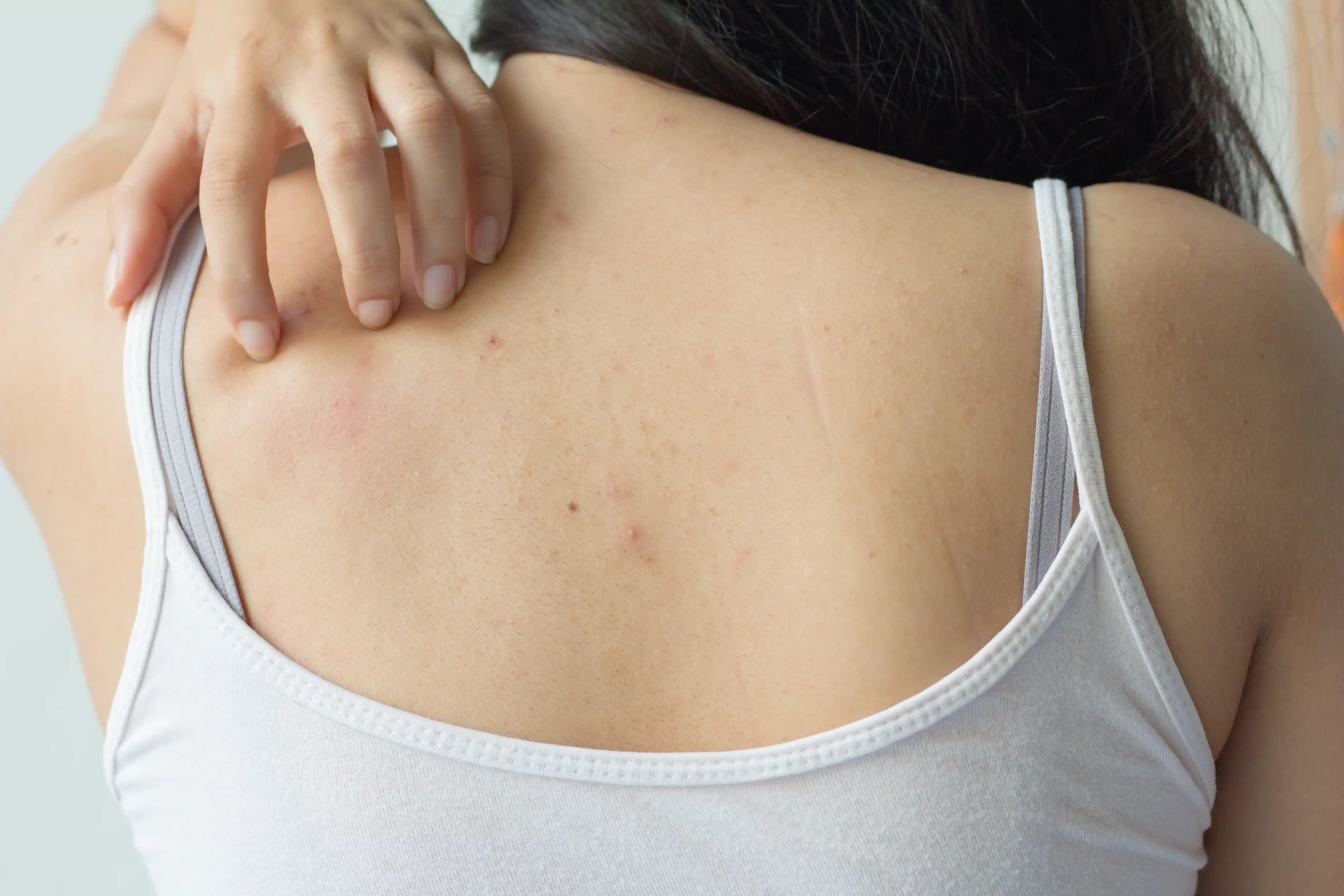
Whether it appears in an infant, child, or adolescent, one or more itchy bumps on the back can cause concern. As a parent, you're looking for both the cause of this skin imperfection and how to quickly soothe your child's skin. Rest assured: most of the time, these are minor and temporary conditions. In this article, we'll review the common causes of an itchy back bump (pruritic), learn to differentiate types of bumps, and discover the gentle care and routines recommended to effectively soothe your child's sensitive skin.
Why do I have an itchy bump on my back?
Common causes
Several causes can explain the appearance of itchy bumps on the back. The good news is that these causes are most often harmless and can be easily relieved. Here are the most common causes:
-
Folliculitis
Folliculitis refers to inflammation of a hair follicle (root of a hair). It manifests as small red bumps centered around a hair, sometimes topped with a small white pustule. These bumps can cause itching and slight pain when touched.
Back folliculitis often occurs after excessive sweating or friction (wearing a backpack, tight clothing) that promotes the accumulation of dead cells and sebum in the follicle. It's generally bacterial in origin but can sometimes be fungal. Fortunately, it's a benign and non-contagious condition that usually disappears within about ten days.
-
Back acne
Back acne, colloquially called "bacne," mainly affects teenagers but can also concern children or adults. It manifests as blackheads, whiteheads, and inflammatory red bumps, similar to facial acne but often deeper. This acne is caused by excess sebum that clogs pores, combined with skin bacteria and promoted by hormonal changes, sweating, and occlusive clothing.
Back acne bumps rarely itch intensely – they're often more painful than irritating – but sweat or friction can make them pruritic. Although not aesthetically pleasing, this body acne is harmless. It's important to adopt appropriate hygiene and non-comedogenic care products, avoiding scratching or popping these bumps to avoid worsening inflammation.
-
Eczema / contact dermatitis
If the itchy bump takes the form of a dry red patch, it may be eczema. Atopic eczema is a chronic inflammatory skin disease, common in infants and children, characterized by red, dry patches that cause intense itching. These patches may contain fine oozing vesicles if the child scratches a lot, then form crusts. Eczema often appears on the back, chest, or in skin folds, evolves in flare-ups, and is absolutely not contagious.
Contact with an allergen or irritant can also cause contact dermatitis on the back: allergy to fabric in clothing, to laundry detergent, or to skincare ingredients. It manifests as a localized rash where the substance touched the skin, with red patches, sometimes vesicles, and significant itching. Once the offending substance is identified and eliminated, the irritation disappears within a few days.
-
Hives and rapid reactions
Hives is a sudden skin reaction, often of allergic origin, that presents as raised patches, pink or red, resembling nettle stings. It's accompanied by intense itching and can easily manifest on the back. The patches appear within minutes and generally disappear in less than 24 hours, sometimes reappearing elsewhere on the body.
Common triggers include foods, medications, insect bites, but also physical factors like heat, cold, or stress. For example, a stressed or sweaty child may develop a few patches that will itch then quickly fade. Hives is generally benign and transient, but if lesions persist more than a day or are accompanied by other symptoms (lip swelling, breathing difficulties), seek emergency care.
-
Fungal acne
"Fungal acne" is folliculitis caused by yeast (most often Malassezia). It occurs on the back and chest, particularly in teenagers and young adults, when heat and humidity promote the proliferation of these yeasts. It manifests as numerous small red papules that resemble classic acne but cause notable itching. Indeed, classic acne bumps don't normally itch: if several red bumps on the back itch intensely, it may be fungal folliculitis.
Fungal acne can dry out the skin and cause fine scales. It's not contagious from person to person (the yeasts in question are part of the usual skin microbiome), but can persist as long as favorable conditions are present. Fortunately, once diagnosed, it responds well to appropriate antifungal products.
-
Insect bites and other irritations
Don't forget that a simple insect bite can explain an isolated itchy bump on the back. Mosquitoes bite through thin clothing in summer, leaving a swollen red bump that's very itchy with a small central point. Similarly, a spider or flea bite can cause one or more small bumps accompanied by itching. These lesions appear acutely and are harmless: the discomfort fades within a few days.
Other irritations can create "false bumps" that itch: for example, miliaria (heat bumps) manifests as tiny red or transparent bumps on covered and warm areas of the body. They itch slightly but disappear quickly by cooling the skin. Faced with a sudden itchy bump, think about the context: summer season, new clothing or product used, as the explanation is sometimes quite simple.
Recognizing the cause: how to differentiate itchy bumps?

Observe the appearance: redness, relief, vesicles, scales
To identify the cause of a back bump, start by examining its visual appearance. An acne bump presents as a red papule or small white pustule, sometimes surrounded by an inflamed area. Folliculitis is recognized by a hair in the center of the red bump, especially if there's pus. An insect bite is distinguished by local swelling in relief, irregularly shaped, with a central point.
An eczema patch presents as a diffuse reddish area with very dry skin that can peel (scales). Hives is recognized by its large patches shaped like "geographic maps" with clear edges. Fungal acne produces multiple small red papules of similar size, sometimes accompanied by fine scaling, grouped in one area. The presence of relief, scales, vesicles, as well as the size and shape of lesions guide toward a diagnosis.
Evaluate the itching: intensity, duration, context
The degree of itching is a valuable clue. Eczema causes intense pruritus, difficult to relieve and can disturb sleep. Classic acne bumps itch little or not at all – if they itch, it's possibly folliculitis. Hives causes very strong itching but of short duration (a few hours). Observe the evolution: an insect bite itches for a day or two then subsides, while an untreated eczema patch can itch for weeks. Context also matters: nighttime or stress-related itching points toward eczema, while pruritus occurring during physical effort suggests a cause related to heat or sweat.
Identify triggers: heat, sports, detergent, care products, clothing
Ask yourself about triggering factors around the appearance of the bump. Heat and sweating are frequently involved: a child who has run or played in the sun a lot may develop follicle irritation or heat bumps. Prolonged wearing of tight synthetic clothing during physical activity can trap moisture against the skin and cause a pruritic rash. Rough or dye-treated materials can also irritate sensitive skin.
Think about products used recently: a scented or poorly rinsed detergent can leave irritating residues and cause contact dermatitis. Using an unsuitable sunscreen or massage oil can also trigger bumps or an allergy. Conversely, lack of hygiene in sheets and clothing can promote microbial proliferation. By identifying a triggering factor, you can adapt management: change detergent, favor light cotton clothing, or rinse the skin after exertion.
What to do if a bump on the back itches?
First steps to take
When a bump or small rash itches on your child's back, it's important to act gently and sensibly. Here are the recommended first steps:
- Don't scratch or pop: Even if the itching is tempting, avoid at all costs letting the child scratch the bump. Scratching worsens irritation and can cause a superinfection (the bump could fill with pus or spread). Additionally, popping a bump with nails creates an open wound prone to bacteria. Cut your child's nails very short to limit damage if they scratch during sleep. For a toddler, you can use cotton mittens at night. If necessary, cover the area with a light bandage to create a physical barrier. Remember that by scratching, you damage the skin and facilitate bacterial contamination, which can cause infections like impetigo. It's better to prevent these complications by preventing scratching.
- Gently clean the skin: Don't rub hard: gently pass gauze or soft cotton soaked in cleansing lotion. Then pat dry with a clean towel. This meticulous cleaning, once or twice a day, helps remove bacteria or irritating substances without stripping the skin.
- Soothe the itching: To quickly relieve the urge to scratch, think about physical and topical methods. You can apply a cool water compress (or DOUCEA thermal or soothing water) for a few minutes, as it contains soothing floral waters on the bump to calm pruritus. Then, applying a cream or soothing lotion suitable for sensitive skin is recommended. Choose a moisturizing and calming product, ideally based on non-irritating natural ingredients (for example a cream containing chamomile, calendula, colloidal oatmeal, or aloe vera). Doucéa's DOUTOPIA Cream, for example, is formulated to soothe irritations and can be applied in a thin layer on the itchy area. These soothing care products will hydrate dry skin, reduce local inflammation, and calm itching.
- Remove the cause if possible: If you suspect an identifiable triggering factor, treat it without delay. For example, if the bump follows exposure to an allergen (powder, grass, chemical product), rinse the skin well with clear water to remove any residue. If it's an insect bite, make sure there's no remaining stinger (for wasps or bees) and lightly disinfect the bite point. If the child is wearing occlusive or irritating wool clothing, replace it with a clean light cotton t-shirt. By eliminating the irritating element, you avoid maintaining or worsening the skin reaction.
Monitor the bump's evolution
After initial care, observe the bump's evolution in the following hours and days. Is the itching decreasing? Is the bump changing in appearance? If possible, take a daily photo to objectively compare its evolution. An insect bite or superficial folliculitis should resolve within a few days: swelling decreases and skin returns to normal appearance.
Be vigilant if the bump enlarges, becomes redder, warmer or painful, or if pus appears despite your care – these signs may indicate infection. Also watch for the appearance of other similar lesions nearby, which could suggest spreading infection. During this period, continue gentle hygiene practices and avoid any trauma to the area (no scratching, no harsh products). If the situation improves, continue the routine until it disappears. If it stagnates or persists, consultation is necessary.
When to consult a dermatologist or pediatrician?
In most cases, an isolated itchy bump on the back won't require medical consultation, as it will resolve spontaneously with simple care. However, certain signs should alert you and prompt you to consult a healthcare professional:
- No improvement after a few days: If despite impeccable hygiene and soothing care, the bump still itches as much after 2 to 3 days, or if it's growing, it's advisable to get medical advice. A dermatologist or pediatrician can evaluate the lesion: sometimes folliculitis may require local antibiotic treatment if it spreads, or cortisone ointment may be prescribed for persistent eczema. Generally, if after a week the bump hasn't disappeared, it's better to consult.
- Infection symptoms: Consult promptly if the bump area becomes very red, hot, swollen, painful, or if the child develops fever. This could indicate bacterial superinfection (e.g., impetigo or abscess formation). The doctor will then need to clean the lesion and possibly prescribe appropriate treatment (antiseptic, antibiotic...).
- Unmanageable itching: If the itching is so strong that it prevents your child from sleeping or affects their quality of life despite measures taken, you must consult. A doctor can prescribe an antihistamine to relieve intense pruritus, or a more powerful cream to calm skin inflammation. This is sometimes necessary in cases of extensive hives or severe eczema, for example.
- Multiplication or persistence of lesions: If other itchy bumps appear on your child's body (especially if they follow a path or are accompanied by small burrows under the skin), it could be a contagious condition like scabies. Similarly, if a rash spreads across the entire back or returns in regular flare-ups despite your care, dermatological advice is desirable to make a precise diagnosis and adapt treatment (significant atopic dermatitis, chronic hives, etc.).
- Child under 6 months: In very young children, particular caution is required. If your baby has a bump or patch that makes them squirm with itching, don't hesitate to talk to your pediatrician. Infant skin is fragile and certain conditions (infant eczema, impetigo, etc.) require medical confirmation and specific advice.
In summary, don't hesitate to consult a healthcare professional if you're worried or if the situation doesn't improve quickly. A doctor can identify the exact cause of the itchy bump and propose, if needed, targeted treatment safely.

Recommended ultra-gentle soothing routine
To care for skin sensitized by a bump or irritation, it's important to adopt a gentle care routine that respects the skin's protective film and promotes healing. We propose a 4-step routine to soothe and protect your little ones' delicate back skin. This routine relies on ultra-gentle formulas, rich in naturally-derived ingredients, to avoid any harsh or irritating ingredients. Here are the recommended steps:
1) Cleanse without stripping the hydrolipidic film
Doucéa Cleansing and Soothing Water
The first step is to cleanse the skin without aggressing it, as overly harsh cleansing can accentuate irritation of itchy bumps. To cleanse the back, favor Doucéa Water rather than regular soap. It effectively removes impurities (sweat, dust, detergent residues, dead cells) that can promote folliculitis or back acne, while respecting the fragile skin balance. Its soothing formula based on chamomile and cornflower floral water calms redness, while its prebiotics and probiotics preserve the skin microbiome – essential for limiting bacterial or fungal infections. Fragrance-free and hypoallergenic, it's used with soft cotton and requires no rinsing, ideal for avoiding further irritation of the itchy area.
2) Soothe very dry skin / atopic-prone skin
DOUTOPIA Cream
If your child suffers from atopic eczema on the back or very dry patches that itch intensely, DOUTOPIA Cream provides enhanced nutrition to restore the skin barrier. Its Madecassoside (Centella Asiatica extract) has healing and anti-inflammatory properties that accelerate repair of scratching micro-lesions. Its natural prebiotic supports the skin microbiome, essential for fighting eczema flare-ups and limiting fungal acne. Its rich texture deeply relipidizes the epidermis, reducing dryness that can worsen itching. Applied daily after bathing, DOUTOPIA strengthens skin resilience: it tightens less, itches much less, and episodes of irritated bumps become less frequent.
3) Quick guide: which Doucéa care for which type of bump?
It's not always easy to navigate between APAISÉA and DOUTOPIA. In reality, these two products are complementary and address slightly different needs. Here's a quick guide to choosing the appropriate Doucéa care based on the nature of the bump or irritation:
- Insect bite, redness, or isolated itchy bump: favor DOUTOPIA Cream. Its primary purpose is to soothe (thanks to its anti-inflammatory effect) and protect. Applied quickly, it will calm itching and prevent the child from scratching, while helping the skin repair.
- Folliculitis or small rash after sweating: first cleanse the area with Doucéa Cleansing Water (to remove sweat and impurities without irritating), then apply a dab of DOUTOPIA. The cream will calm irritation around follicles and create a healthy skin environment thanks to prebiotics, without worsening pore obstruction. If bumps persist more than a few days, consult a doctor as infectious folliculitis may require specific treatment.
- Very dry skin, atopic eczema: DOUTOPIA Cream will be most suitable. Use it for daily maintenance on dry back areas to prevent appearance of new itchy patches. In case of eczema flare-up (red itchy patches), you can continue APAISÉA during the day for immediate relief, but apply DOUTOPIA as foundational care each evening over the entire area to restore the skin barrier.
- Back acne (adolescent): APAISÉA can be used to complement an anti-acne routine. For example, after showering, apply a dab of APAISÉA to back acne areas to soothe inflammation without greasing the skin. Its natural ingredients are non-comedogenic and help skin stay balanced during often-drying anti-acne treatments. However, for moderate to severe acne, don't hesitate to ask a dermatologist for advice on foundational treatment.
In summary, think APAISÉA for any moisturizing and soothing treatment, DOUTOPIA for temporary irritation, localized itching or redness, and to durably nourish very dry skin prone to eczema. And of course, Doucéa Cleansing and Soothing Water fits into all cases as the gentle daily cleansing step.